Smart lighting subtly transforms home workspaces by adapting brightness and tone to match daily rhythms and tasks, reducing eye strain and helping create a more comfortable, focused, and productive work environment.
Smart lighting is transforming home workspaces by adapting to daily rhythms and specific tasks, boosting focus and reducing eye strain. By tuning light color and brightness, it supports both productivity during work hours and relaxation afterward, creating a healthier, more comfortable environment that helps mentally separate work from personal time.
AI-generated
Key Moments
1
Adaptive Lighting for Task-Specific Needs
Adjusting brightness and color temperature according to task type boosts focus and reduces fatigue.
2
Human-Centric Lighting Aligns with Circadian Rhythms
Lighting that mimics natural day-night cycles supports alertness during work and relaxation after work.
3
Smart Lighting Reduces Eye Strain During Screen Use
Balanced ambient and desk lighting combined with screen color shifts help minimize glare and visual fatigue.
4
Lighting Supports Mental Transitions and Work-Life Boundaries
Changing light scenes cues the brain to switch between work modes and signals the end of the workday for better mental separation.
AI-generated
Smart lighting is quietly reshaping home workspaces, becoming a practical layer of daily comfort that supports focus, energy, and visual ease during long work sessions at home.
As remote and flexible work routines settle in, lighting is treated as part of the workspace setup rather than background decor. Many people now notice how light affects alertness across the day. Subtle changes in brightness can shift how long focused work feels sustainable.
Smart lighting setups are no longer just about convenience. They are becoming a core part of how people design healthier, more flexible, and more productive home workspaces, shaping how work feels as much as how it looks.
AI-generated
Instead of leaving one light on all day, workers adjust lighting to match different types of tasks and energy levels. Cooler tones support concentration, while warmer tones feel calmer during slower or creative periods.
Eye strain has become a growing concern as screen time stretches across most of the day for many workers. Poor lighting can increase glare and visual fatigue, making even simple tasks feel harder to sustain over long sessions. Thoughtful lighting reduces unnecessary strain and helps people stay comfortable without constantly repositioning screens or posture.
What once felt like a small upgrade is now used as a simple way to manage energy, comfort, and daily work rhythm in home offices.
How Smart Lighting Supports Focus and Comfort
Smart lighting systems allow users to tune brightness and tone to match the time of day and type of work. Brandsn explain how adjustable lighting helps create better home office environments by balancing task lighting with ambient light for comfort and productivity in their guide to home office lighting.
Lighting that follows natural rhythms is also gaining traction. Human-centric lighting concepts are designed to support alertness during work hours and relaxation later, helping separate work time from personal time, as described in Philips’ overview of wellbeing lighting and circadian-focused setups.
Reducing Eye Strain During Screen Work
Long hours in front of screens often lead to eye strain, headaches, and fatigue. Proper lighting helps reduce harsh contrast between screens and surrounding areas, which can make focusing more comfortable over time.
Some users also pair smart lighting with screen color tools to reduce blue light exposure at night. Software like f.lux is commonly used to shift screen tones in the evening, helping support visual comfort and sleep patterns during late work sessions.
Key Benefits for Daily Work
Task-based lighting control: Users can set brighter, cooler light for focused tasks and softer, warmer light for reading, meetings, or wind-down periods.
Reduced glare and contrast: Balanced ambient and desk lighting lowers harsh shadows and screen glare, helping reduce visual fatigue over long sessions.
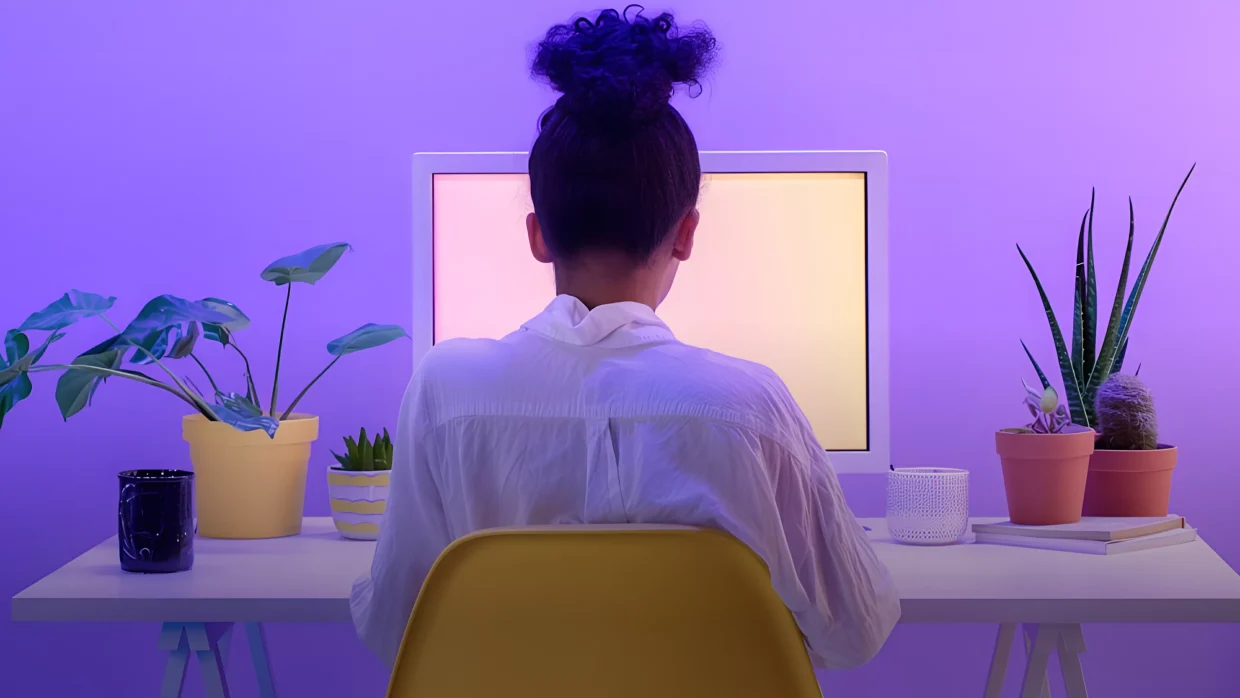
Image by Jamie Blaire
Lighting That Adapts to Work Routines
One of the biggest changes is how lighting now adapts to daily schedules. Automated scenes can shift light throughout the day to support energy in the morning and calmer tones in the afternoon, helping structure the workday visually.
Many smart systems also integrate with wellness-focused lighting ideas. Research into circadian lighting systems shows how adaptive light can support mood, alertness, and overall comfort by aligning indoor light with natural biological rhythms.
Smart Lighting as Part of a Healthier Workspace
Lighting is increasingly seen as part of overall workspace health, alongside ergonomics and screen setup. Small changes in light tone and brightness can influence how energized or drained someone feels during the day.
Better lighting also supports clearer boundaries between work and personal time. Changing light scenes at the end of the day can signal that work is finished, helping with mental transitions.
Environment quietly dictates how long focus lasts.
Emily Carter,
Workspace Consultant
For shared or flexible spaces, adaptive lighting can adjust based on occupancy or time, making home offices more versatile for different users and tasks.
Over time, these small adjustments can reduce daily fatigue and make long-term remote work more sustainable and comfortable.
Lighting That Supports Mental Transitions
Some of the most useful lighting changes happen around the moments people switch modes—starting work, entering a deep-focus block, or stepping away for breaks.
When lighting is predictable and tied to routine, it becomes a subtle cue that helps the brain settle into the next task faster, especially in shared home environments where work, rest, and personal life overlap in the same physical space.
Designing Scenes for Real-Life Focus
A good setup usually isn’t one “perfect” scene—it’s a small set of scenes that match how work actually unfolds, from quick admin tasks to long calls and quiet concentration.
When lighting changes at the same points each day, it can reduce the mental friction of constantly resetting attention, especially in homes where the workspace shares the same room as everything else.
Over time, those cues can feel almost automatic, turning lighting into a simple system that supports consistency without needing constant tweaks or new gear.
Practical Smart Lighting Habits
Day-to-night lighting shifts: Gradually changing light temperature helps support focus during work hours and relaxation in the evening.
Dedicated task lighting: A focused desk lamp combined with softer room lighting creates better balance and reduces strain on the eyes.
Smart lighting setups are no longer just about convenience. They are becoming a core part of how people design healthier, more flexible, and more productive home workspaces, shaping how work feels as much as how it looks.






















Following your blog has made me rethink some of my everyday choices.
Really appreciate you noticing that—thanks for reading closely and often!